quarta-feira, 10 de julho de 2019

Citroen DS 19 Décapotable by Chapron 1963, França


Citroen DS 19 Décapotable by Chapron 1963, França
Fotografia


Amongst the most desirable versions of the famed Citroën DS was the factory-authorized décapotable, or cabriolet usine, produced by Parisian coachbuilder Henri Chapron. Chapron took up what the factory had neither the time nor the resources to do, and he produced his first two-door convertible version of the “Goddess” in 1958. For 10 years, from 1961 to 1971, Chapron produced 1,365 décapotables to individual customer order. After official production ended, a handful of cars continued to be produced on a custom basis until 1978.
Beautifully restored and comprehensively upgraded, this 1963 Citroën DS 19 décapotable offers much more than meets the eye. The initial restoration took place around 2004, while the car was in Europe. The cosmetic restoration is documented with a series of photographs, and copies of ownership papers place the car in Holland in 2006.
In 2011, the Citroën came to the United States under new ownership; the car was serviced and prepared for touring and rallies. The owner commissioned an Indiana-based prototyping/engineering firm to source, build, and install a late-model CX GTi Turbo engine adapted from a later Citroën CX. The engine features a “stroker” crankshaft that’s been micropolished, lightened, and balanced, then paired with custom billet pistons and balanced connecting rods. Additional features include a ported-polished head with stainless valves, a specially designed cam, custom CNC-milled flywheel, and an updated turbo. Fueling and ignition are controlled via a standalone Motec M400 ECU, custom-adapted with a Hall Effect distributor, crank, and cam sensors. A custom alloy radiator by Ron Davis keeps things cool, and the five-speed gearbox has been suitably upgraded with gears made by Hewland. Another upgrade worth noting is the conversion of the car’s hydraulics to use the widely available LHM fluid.
Presented in a gorgeous shade of blue with wonderful accenting brightwork, the DS 19 rides on Vredestein Sprint Classic radials mounted on factory steel wheels finished in cream with full stainless-steel wheel covers. Lighting is provided by Cibie headlamps and S.E.V. Marchal fog light pods specifically designed for the DS. The interior is beautifully restored, featuring supple tan leather seats, optional Jaeger round-dial instrument panel, as well as a restored factory radio. The blue canvas soft-top fits snugly, is fully lined, and ties the color scheme together beautifully.
The car is accompanied by a detailed history file with restoration photos and invoices for the service and engine conversion, totaling nearly $200,000. Additionally, the original 1.9-liter engine, gearbox, and parts removed during the conversion are included, F.O.B. seller. A rare coachbuilt DS, this tastefully upgraded example is sure to impress any French automobile enthusiast with its wonderful 1960s styling and upgraded performance.

Packard Twelve Individual Custom Convertible Sedan by Dietrich 1934, Estados Unidos


Packard Twelve Individual Custom Convertible Sedan by Dietrich 1934, Estados Unidos
Fotografia

In 1920 gold-mine owner John Franklin Boyd died and left his entire estate—$3 million and a manse in San Rafael, California—to his only living daughter, Louise. One might have expected a society lady of the time to spend the rest of her days idly spending the principal, but Louise Arner Boyd, it would soon be proven, was different. She loved adventure—not merely funding the expeditions of others, but being in the thick of it, visiting new and different nations and exploring their rugged terrain. She traveled the world in search of new ideas and new discoveries, most prominently to the Arctic Circle, an area in which she became a respected expert after seven painstakingly planned research junkets and the publication of two well-received books. Today an area in Greenland adjacent to a glacier she studied is known as Louise Boyd Land.
She was still a lady, of course; she loved to attend balls, often wearing on her gown the Légion d’Honneur medal that France awarded her for searching for the lost explorer Roald Amundsen. She traveled widely, doing so in style, staying at the best hotels she could find and usually traversing new-torn paths in her own chauffeured automobile. According to J.M. Fenster’s Packard: The Pride, in 1934 Miss Boyd’s automobile was this Packard Twelve, an individual custom convertible sedan by Dietrich, one of the most lush and expensive models available. It was built to her order, with a division window twixt the front and rear seats and reading lights to allow her to make notes during the journey.

In 1935 Boyd traveled with the car and her family’s longtime chauffeur, Percy Cameron, to Poland as a delegate of the United States government to the International Geographic Congress in Warsaw. The American Geographical Society asked her to extend her stay and undertake a photographic study of rural Poland’s various cultures and ethnic groups, and she did so. Driven by Cameron, the Individual Custom Packard carried Boyd alongside horse-drawn carts on roads that had likely never seen an automobile, much less one so grand. It fit into few garages, but that was no matter, because there were few garages. At the monastery at Ławra Poczajowska, the Packard spent the night in the courtyard, with one of the bearded, hooded monks slumbering inside to prevent its theft.
At the end of the journey, Boyd, Cameron, and the Packard returned triumphantly to the U.S., and her meticulously detailed report and over 500 photographs were published in 1937 as Polish Countrysides, many including this car.

Louise Boyd eventually moved on to other adventures and other automobiles, but remained true to Packards, as well as to Dietrich; Raymond Dietrich later customized a 1952 sedan for her. The Individual Custom Twelve that had served faithfully in Europe remained in the United States. According to Edward J. Blend’s The Magnificent Packard Twelve of Nineteen Thirty-Four, later owners were Richard Jenkins of New Jersey and Phillip Goddard of Iowa.
The car was then acquired by the late Bill Hirsch of Newark, New Jersey, who beautifully restored it to original condition. Hirsch was very proud of the Packard, which he showed extensively; to this day, the logo of his automotive finish and upholstery supply company is the unmistakable profile of this Packard. In his ownership the car was photographed by Roy Querry and appeared as one of twenty special automobiles described at length in J.M. Fenster’s Packard: The Pride, published in 1992. It was also used as the basis for the highly regarded model of the individual custom convertible sedan produced by the Franklin Mint.
In 1999 the car was acquired by the present owner, in whose superb collection it has resided for twenty years. He notes that it was used on at least four CCCA CARavans, while remaining in fine enough condition to achieve its AACA Senior First Prize in 2000, followed by, in 2001, its CCCA Premier First and the AACA’s Joseph Parkin Award, recognizing it as the most outstanding Packard in its division.
The car was freshened in 2015, receiving a cosmetic restoration by Colour Restoration of Longmont, Colorado, in time for exhibition at the Pebble Beach Concours d’Elegance, where it was an award winner in the legendarily rigorous American Classic Open Packard class. The following year it received the Don Sommer Award as Most Significant Classic at the Concours d’Elegance of America at St. John’s, an impressive achievement in a year that saw the attendance of numerous other significant Dietrich designs.
Simply put, today Louise Boyd’s Packard remains an automobile worthy of its original owner—the sleek embodiment of adventurous spirit, meticulous preparation, and faultless good taste.

Fonte : https://rmsothebys.com/en/auctions/mo19/monterey/lots/r0078-1934-packard-twelve-individual-custom-convertible-sedan-by-dietrich/781468


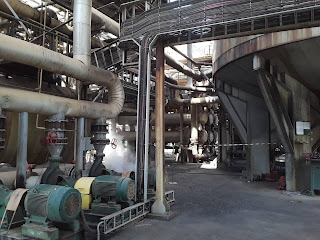
Usina Uberaba, Uberaba, Minas Gerais, Brasil


Usina Uberaba, Uberaba, Minas Gerais, Brasil
Uberaba - MG
Grupo Balbo
Fotografia

O Filho da Noiva 2001 - El Hijo de la Novia


O Filho da Noiva 2001 - El Hijo de la Novia
Argentina / Espanha - 123 minutos
Poster do filme

A Fuga 2001 - La Fuga


A Fuga 2001 - La Fuga
Argentina - 117 minutos
Poster do filme

Nove Rainhas 2000 Nueve Reinas


Nove Rainhas 2000 Nueve Reinas
Argentina - 114 minutos
Poster do filme

O Mesmo Amor, a Mesma Chuva 1999 - El Mismo Amor, la Misma Lluvia


O Mesmo Amor, a Mesma Chuva 1999 - El Mismo Amor, la Misma Lluvia
Argentina / Estados Unidos - 113 minutos
Poster do filme